Interior Glass Railing Systems in Miami, Fort Lauderdale, & West Palm Beach, FL Homes and Buildings
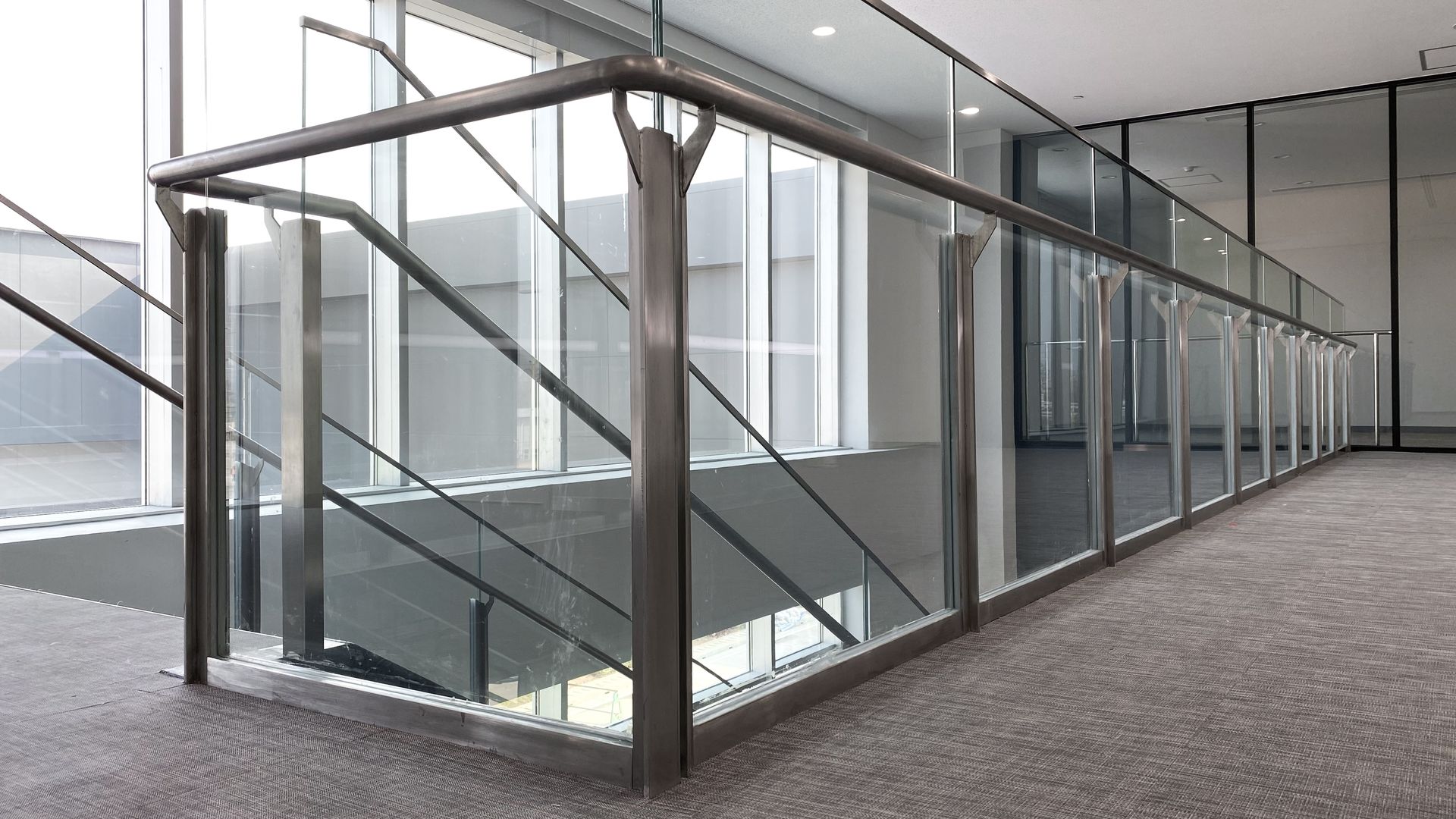
Interior glass railings are architectural safety barriers installed inside residential and commercial structures to secure open edges such as staircases, mezzanines, lofts, and interior balconies. In Miami, Fort Lauderdale, & West Palm Beach, FL, these systems are widely used in modern construction and renovation projects where open floor plans and natural light flow are important design considerations.
Unlike traditional railing systems that rely on wood or metal balusters, interior glass railings use tempered or laminated glass panels as the primary barrier material. This allows interior spaces to remain visually connected while still maintaining required safety separation between levels. These systems are especially common in multi-story homes, office interiors, and contemporary mixed-use buildings.
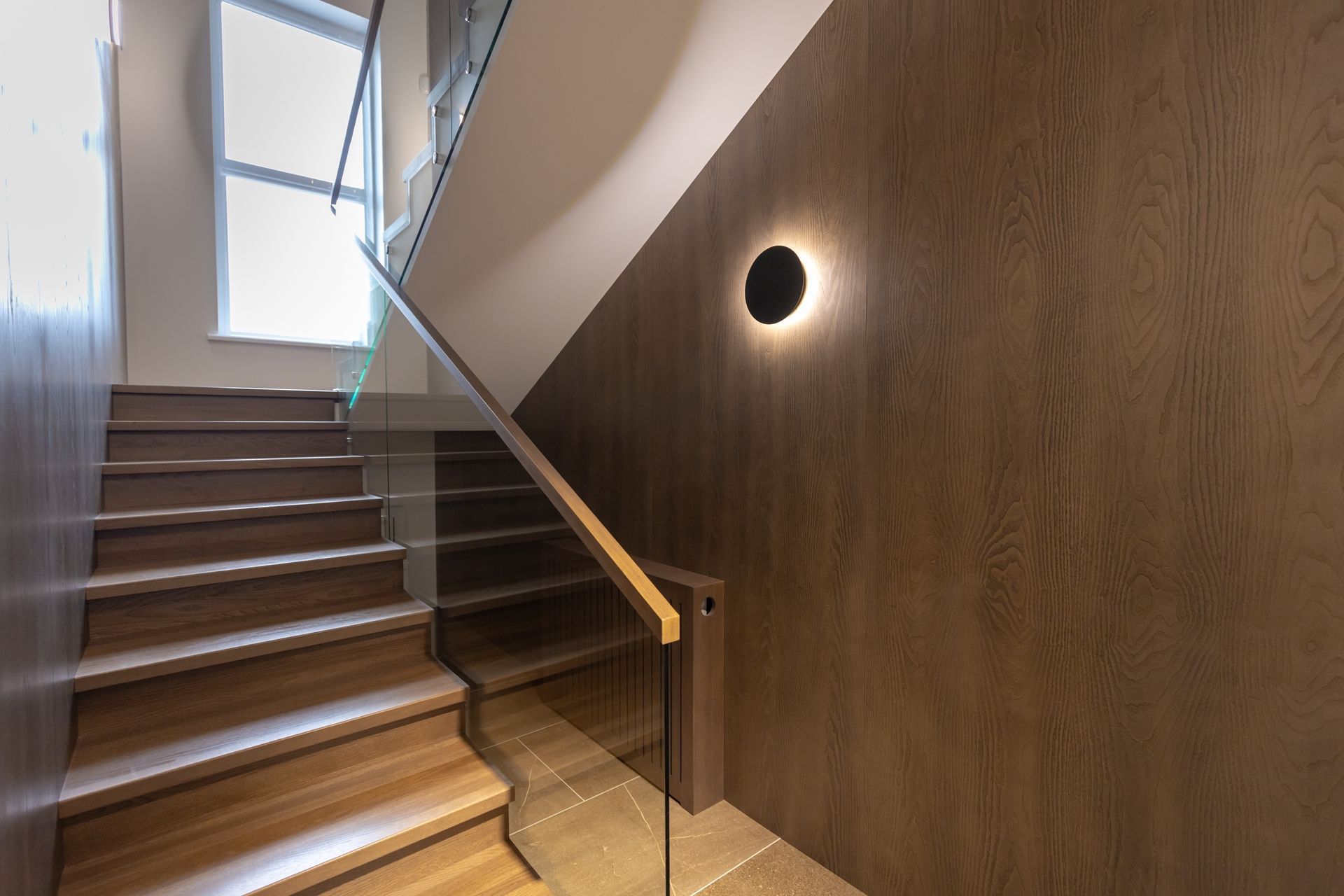
Interior installations are designed to integrate with surrounding flooring, stair structures, and wall finishes. Depending on the layout, the glass can be installed along straight runs, curved staircases, or multi-landing configurations where transitions between floors require continuous protection.
Structural Designs for Interior Glass Railings
Interior glass railing systems in Miami, Fort Lauderdale, & West Palm Beach, FL are engineered in several structural formats based on architectural layout, support structure, and visual design intent.
Frameless Interior Glass Railings
Frameless systems rely on a concealed base channel or recessed track embedded into the floor or stair structure. The glass panels are secured from the bottom, creating a continuous transparent barrier without visible posts or frames. This system is commonly used in modern residential interiors where minimal visual interruption is desired between floors.
Standoff Mounted Glass Railings
Standoff systems use circular or cylindrical metal fittings that attach glass panels directly to the side of a structural surface such as a stair stringer or concrete slab edge. This design creates a floating appearance, often used in feature staircases or architectural focal points within interior spaces.
Post and Clamp Interior Systems
Post and clamp systems use vertical metal posts anchored to the floor or stair structure. Glass panels are secured using mechanical clamps attached to these posts. This configuration is often selected when additional structural reinforcement is required, especially in high-traffic interior environments or multi-unit residential buildings.
Glass and Structural Materials Used Indoors
Interior glass railing systems rely on engineered glass products and precision hardware components designed for safety, stability, and long-term performance in indoor environments.
Tempered Safety Glass
Tempered glass is commonly used in interior applications due to its high strength and controlled breakage characteristics. It is manufactured through a thermal process that increases resistance to impact and ensures that, if broken, it fractures into small, less hazardous fragments.
Laminated Glass Panels
Laminated glass is composed of multiple layers bonded with a durable interlayer that holds the glass together even when cracked. This type of glass is frequently used in staircases and upper-level railings where additional safety retention is required in residential and commercial interiors.
Aluminum and Stainless Steel Hardware
Support components such as base channels, clamps, and standoff fittings are typically made from stainless steel or aluminum. These materials provide structural stability and are selected for their clean appearance, corrosion resistance, and compatibility with interior finishes commonly found in Miami, Fort Lauderdale, & West Palm Beach, FL properties.
Floor-Mounted Base Channels
Base channels are linear metal tracks installed directly into flooring or stair structures. They secure glass panels using friction-based systems or compression fittings. These channels are often concealed with flooring finishes to create a seamless transition between glass and surrounding materials.
Installation Process for Interior Glass Railings
The installation of interior glass railings requires detailed planning, precise measurement, and coordination with flooring, stair, and structural elements to ensure alignment and safety compliance.
The process begins with evaluating the interior layout, including staircase geometry, floor openings, and mezzanine edges. Accurate measurements are taken to determine panel sizes, angles, and mounting points to ensure that the railing system aligns perfectly with architectural dimensions.
Once the layout is confirmed, base channels or mounting hardware are installed into the floor or structural edge. These components must be leveled precisely to ensure that glass panels maintain consistent vertical alignment across all sections of the installation.
Glass panels are then carefully positioned using lifting equipment and inserted into the mounting system. Depending on the configuration, rubber gaskets, compression fittings, or structural adhesives may be used to secure each panel in place.
Final adjustments are made to ensure uniform spacing between panels, correct vertical alignment, and smooth transitions along stair runs or level changes. This step is especially important in interior staircases where slope angles must match the structural rise and run of the staircase.
Interior Building Code Requirements in Miami, Fort Lauderdale, & West Palm Beach, FL
Interior glass railing systems installed in Miami, Fort Lauderdale, & West Palm Beach, FL must comply with Florida Building Code requirements related to fall protection, load resistance, and barrier height. These regulations apply to both residential and commercial interior environments.
For staircases and elevated openings, railing systems must meet minimum height requirements to prevent fall hazards. Glass thickness and support spacing are determined based on engineered load calculations that account for occupancy and expected usage patterns.
In commercial interiors such as office buildings and retail spaces, additional impact resistance standards may apply due to higher foot traffic. Systems must be designed to withstand accidental contact while maintaining structural stability over time.
Interior installations must also ensure that anchoring systems are securely integrated into floor structures, stair stringers, or concrete slabs to prevent movement or deflection under load conditions.
Maintenance and Long-Term Performance of Interior Glass Railings
Interior glass railings require routine maintenance to preserve clarity, alignment, and structural integrity in Miami, Fort Lauderdale, & West Palm Beach, FL properties.
Glass surfaces are typically cleaned using non-abrasive cleaning solutions to remove fingerprints, dust, and interior buildup. Regular cleaning helps maintain transparency and ensures that natural light continues to pass through interior spaces without obstruction.
Hardware components such as clamps, base channels, and standoff fittings are periodically inspected to ensure they remain tight and properly aligned. Even though interior environments are less exposed to weather conditions, regular use can gradually affect fastener tension and alignment.
Sealants and structural joints are also checked for wear or separation, particularly in areas where temperature variation or building movement may occur over time. Maintaining these elements helps preserve system stability and long-term performance.
With proper installation and consistent maintenance, interior glass railing systems remain a durable and visually seamless architectural feature in residential and commercial interiors across Miami, Fort Lauderdale, & West Palm Beach, FL